
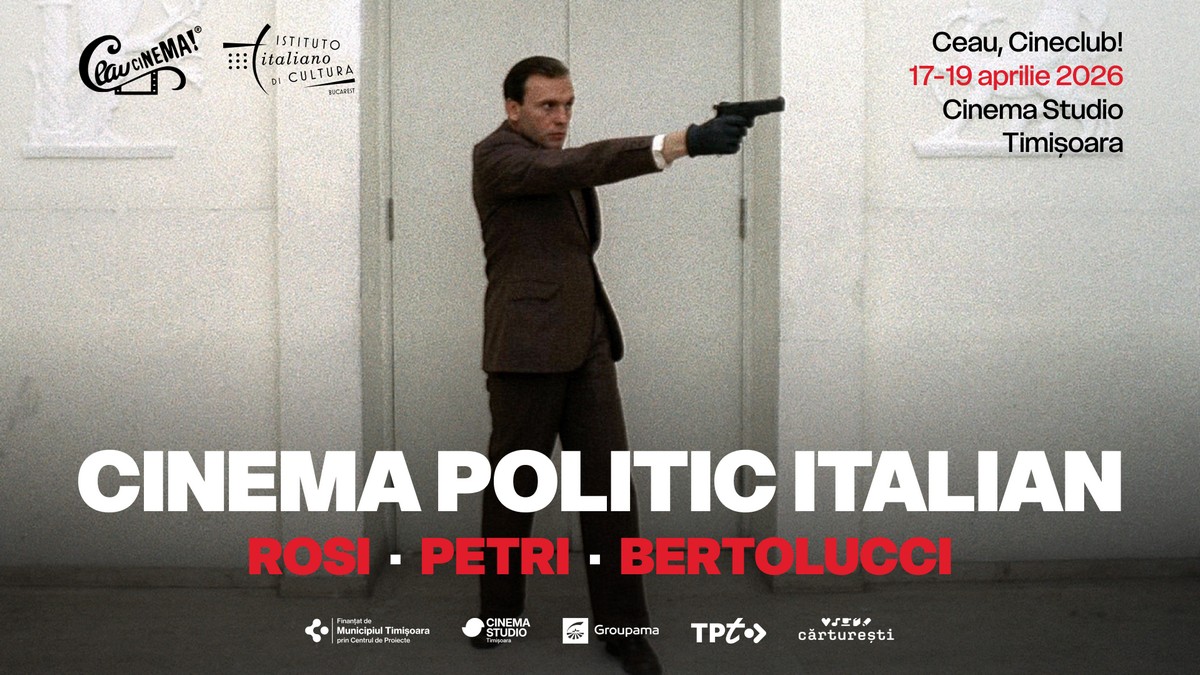
Four award-winning films from the 1960s–1970s, created by three major directors from the golden age of Italian political cinema, will be screened in restored versions as part of a retrospective organized by Ceau, Cineclub! and the Italian Cultural Institute. The event will take place between April 17–19 at Cinema Studio in Timișoara.
The program and tickets are available on the websites of Ceau, Cinema! and Cinema Studio.
The selection includes two powerful classic films by Francesco Rosi, “Salvatore Giuliano” (1962) and “Hands Over the City” (“Le mani sulla città”, 1963), as well as “Investigation of a Citizen Above Suspicion” (“Indagine su un cittadino al di sopra di ogni sospetto”, 1970), the chilling masterpiece by Elio Petri, and “The Conformist” (“Il conformista”, 1970), the striking feature that made Bernardo Bertolucci famous.
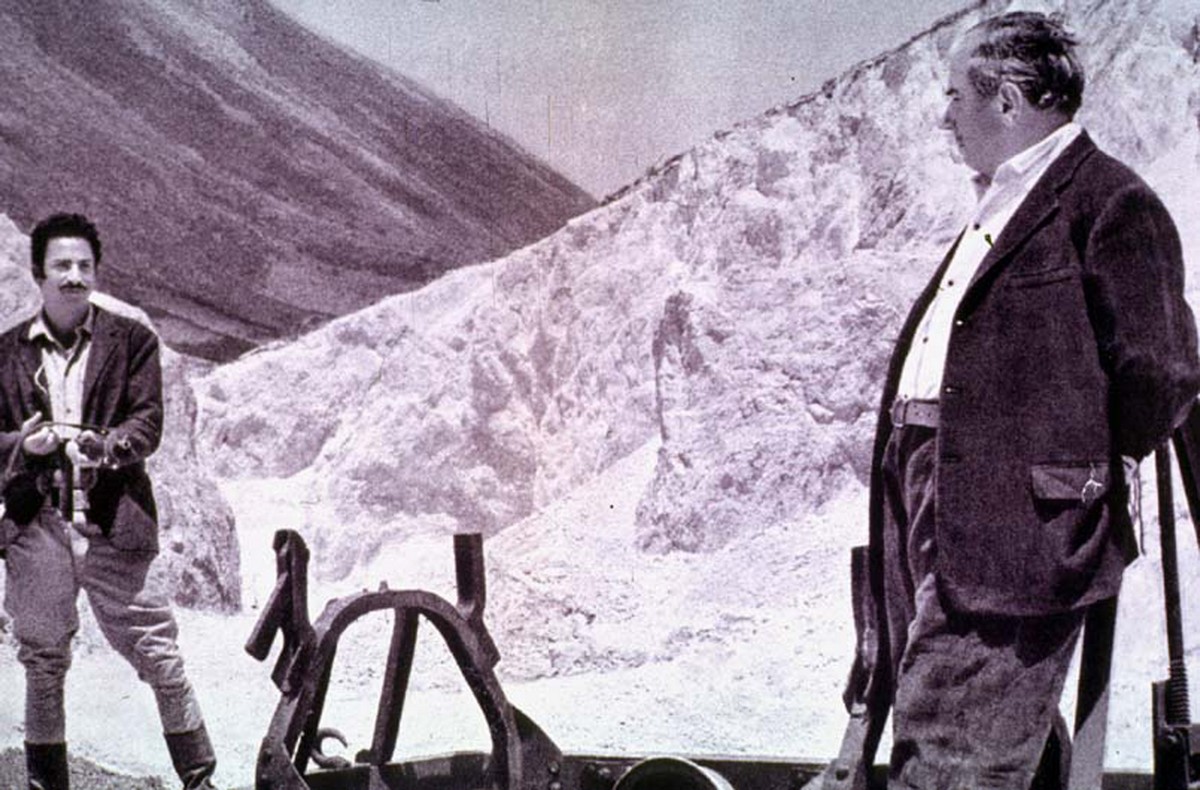
In “Salvatore Giuliano”, the complex power struggles between government authorities, the separatist movement, and the mafia in 1940s Sicily culminate with the death of the famous bandit Salvatore Giuliano. The film earned Francesco Rosi the Silver Bear for Best Director at the Berlin Film Festival in 1962 and was later included by American filmmaker Martin Scorsese in his list of the ten greatest films of all time.
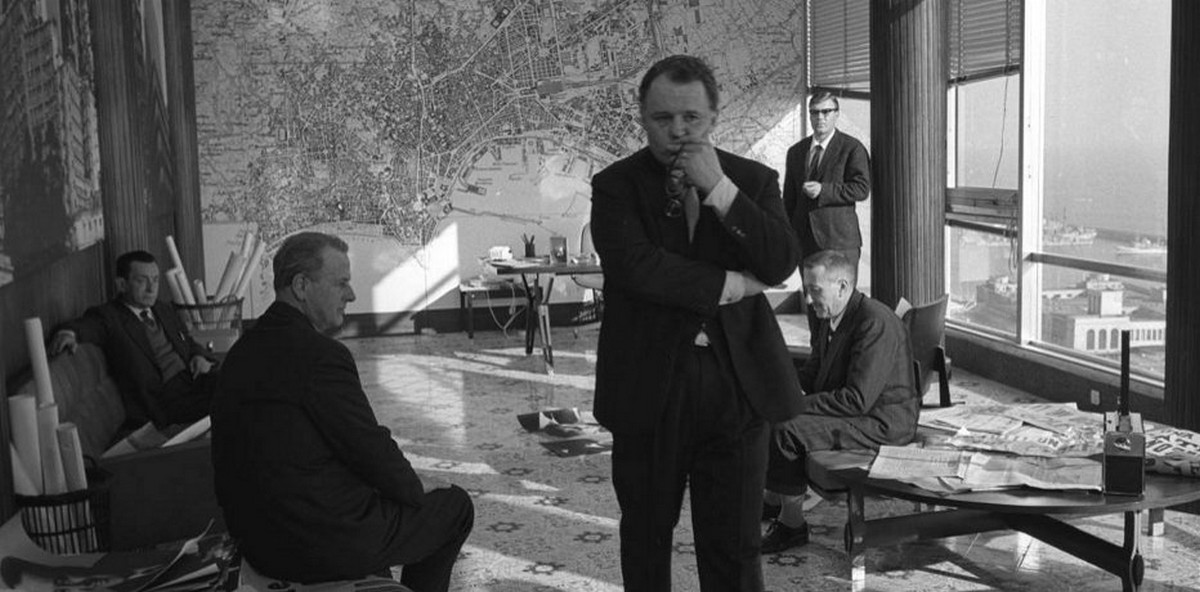
A year later, in 1963, Francesco Rosi won the Golden Lion at the prestigious Venice Film Festival for “Hands Over the City”. On the eve of local council elections, the collapse of a building forces a real estate developer and his political supporters to defend themselves against a scandal.
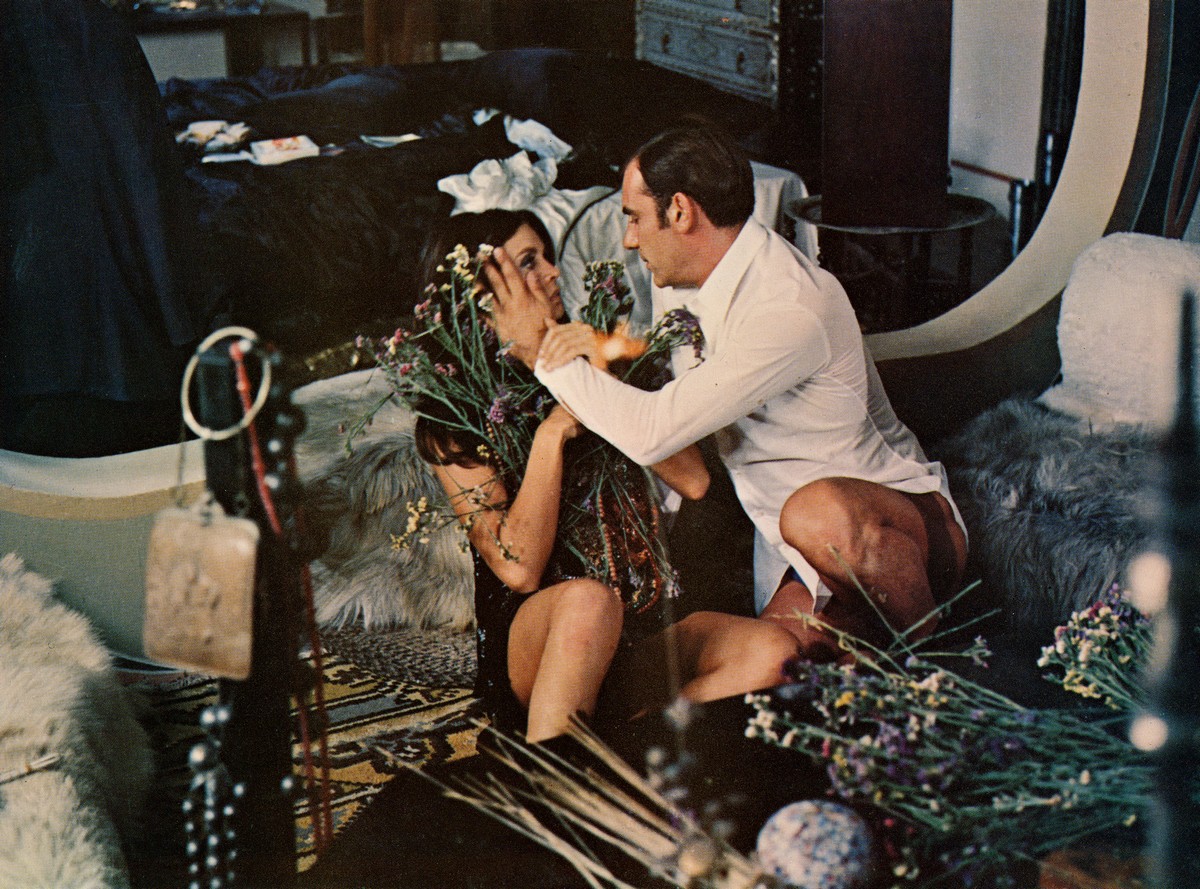
Directed by Elio Petri, another key figure of Italian political cinema, “Investigation of a Citizen Above Suspicion” follows a high-ranking police officer, played by Gian Maria Volontè, who murders his sadomasochistic lover and deliberately plants evidence pointing to himself, as a sardonic test to see whether he truly stands above suspicion. The film won the Grand Jury Prize and the FIPRESCI Prize at the Cannes Film Festival, as well as the Academy Award for Best Foreign Language Film.
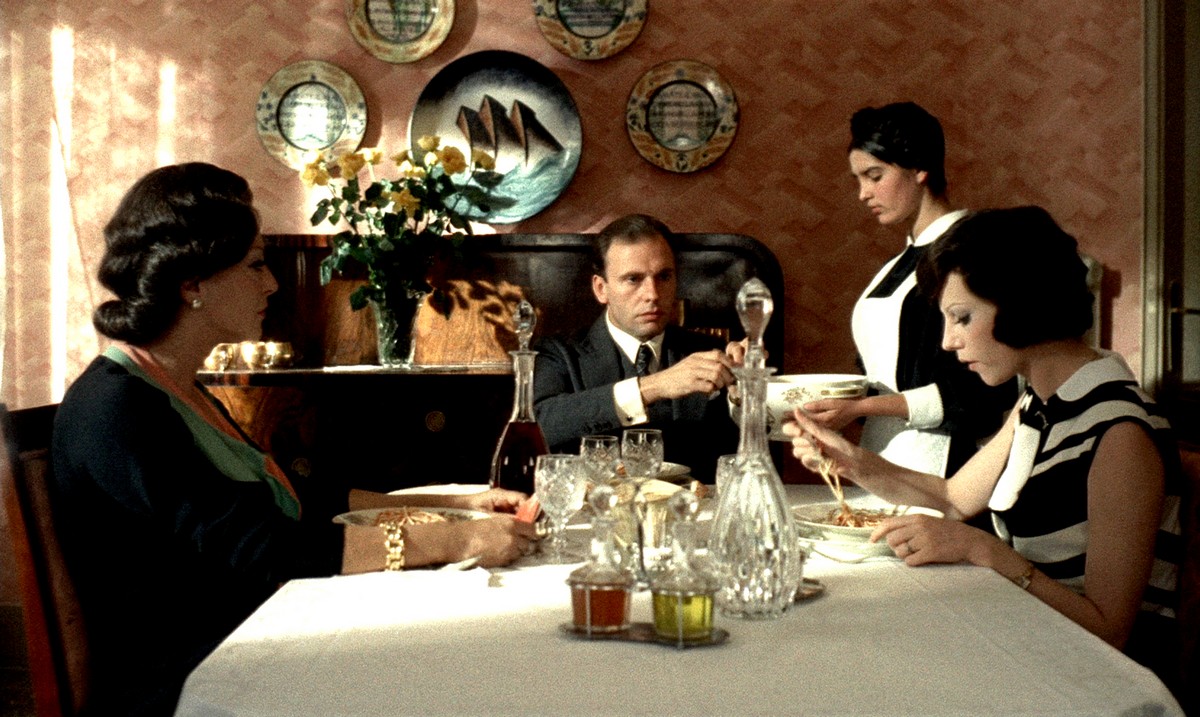
In “The Conformist” by Bernardo Bertolucci, Jean-Louis Trintignant plays a weak-willed Italian man who becomes a fascist functionary sent abroad to arrange the assassination of his former professor, now a political dissident. The film competed at the Berlin Film Festival and received the David di Donatello Award for Best Italian Film.
“Italian cinema has had many golden periods throughout its history. The economic development following the Second World War took place against the backdrop of social movements and major political scandals, many rooted in the fascist period or connected to the mafia. In this context, the fascinating movement of political cinema emerged in the 1960s, producing over two decades a series of memorable films made by a new generation of filmmakers who dared to address, without compromise, controversial contemporary or recent cases and personalities, using an innovative cinematic language. The retrospective we have prepared together with our partners from the Italian Cultural Institute in Bucharest presents four fundamental films of this unique cinematic movement. In a threatening present, where major issues seem largely avoided by mainstream auteur cinema, the political works of directors such as Francesco Rosi, Elio Petri, and Bernardo Bertolucci remind us of cinema’s power to awaken consciences,” says Ionuț Mareș, curator of Ceau, Cineclub!
“We are very pleased to bring this retrospective dedicated to Italian political cinema of the 1960s and 1970s to cinemas across the country, thanks to the tireless work of its curator, Ionuț Mareș. This program offers Romanian audiences the chance to discover films that explore power, justice, and social tensions with clarity and insight, and which remain highly relevant today. Although shaped by distinct artistic sensibilities, the films of Rosi, Petri, and Bertolucci share a focus on how power operates and affects people’s lives. Their films offer a powerful and critical portrait of Italy during a period of major social and political change. At a time when issues of historical memory and trust in institutions are once again central, we believe this retrospective can deeply resonate with Romanian audiences. It invites viewers to reflect on cinema not only as an art form, but also as a vital space for reflection, dialogue, and civic awareness,” says Laura Napolitano, director of the Italian Cultural Institute. “Italian political cinema (‘cinema d’impegno’, ‘engaged cinema’, ‘civic cinema’) most often refers to a body of films made between the mid-1960s and early 1980s, influenced by a decidedly progressive—though rarely radical—agenda, and explicitly addressing contemporary or historical political events or issues such as factory strikes, political terrorism, state violence, mafia conspiracies, and the omnipresence of capitalist speculation—as well as antifascist resistance and, more broadly, episodes from the history of leftist movements in the 20th century” (Mauro Resmini, “Italian Political Cinema. Figures of the long ’68”).
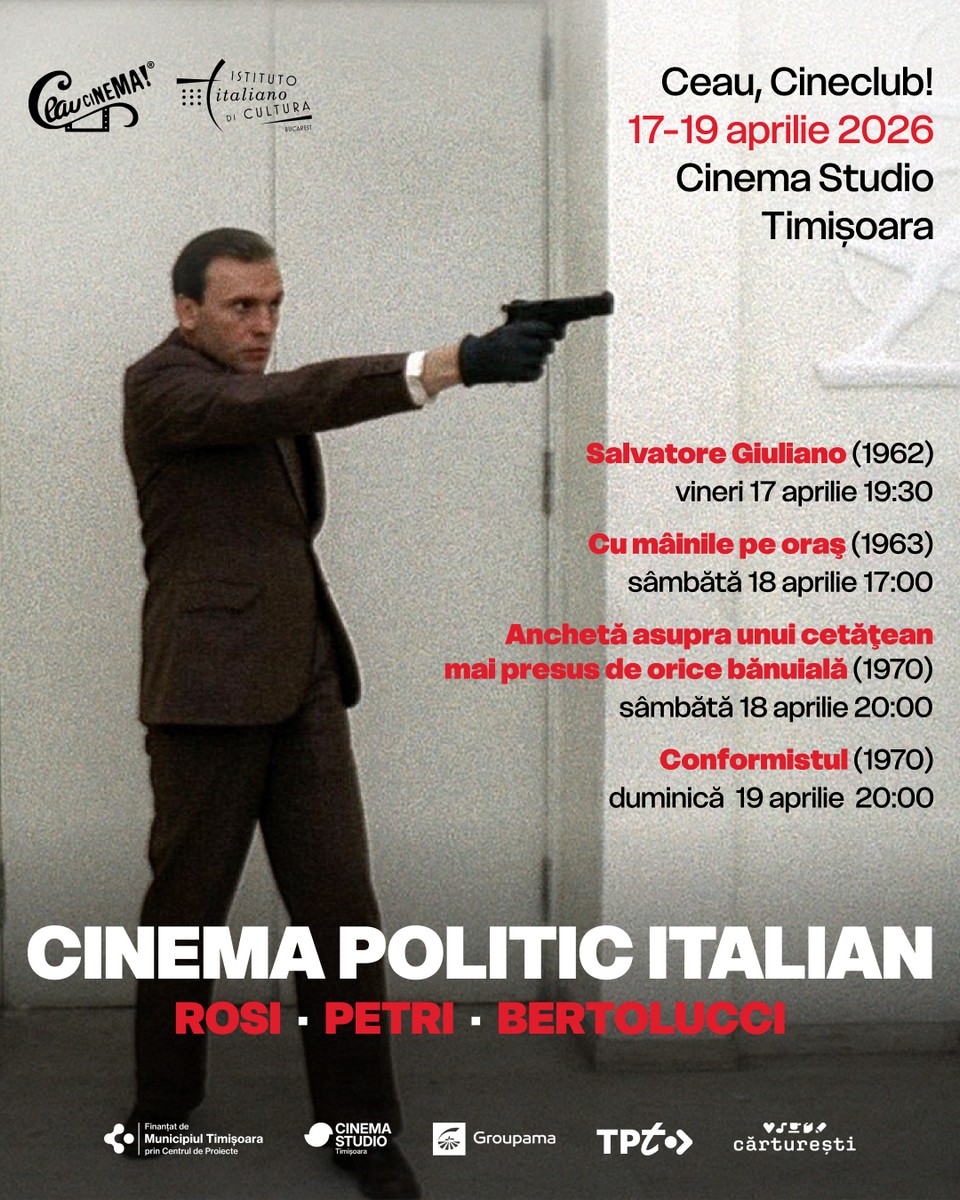
The screenings are part of Ceau, Cineclub!, a series of monthly retrospectives organized by Ceau, Cinema! outside the festival.
More details can be found on the festival’s Facebook and Instagram pages.
The retrospective will also take place at Cinema Arta in Cluj-Napoca (April 14th – May 5th), Cinema Elvire Popesco in Bucharest (April 16th–19th), and Cinema Ateneu in Iași (April 21st–29th).
The ITALIAN POLITICAL CINEMA retrospective is organized by Ceau, Cinema! and the Italian Cultural Institute in Bucharest.
Funded by the Municipality of Timișoara through the Project Center.
Sponsor: Groupama
Partner: Cinema Studio
Promotion partners: STPT, Cărturești, Agerpres